The short answer
Start a fictional economy with one thing people need that is hard to get. Then decide who controls its supply, how people pay for it, which route brings it in, who taxes it, and who borrows to buy it. Follow a single shortage through those links to see who gains, who suffers and what each of them does next. Plausible cause and effect matters more than economic expertise or precise figures.
Your characters pay for a room, bribe a gate guard and buy passage downriver, and nobody asks what any of it costs. Then the plot needs a famine, a blockade or a ruinous debt, and the economy cannot push back, because it was only ever scenery.
What it lacks is a chain you can follow when something goes wrong: what people need, why they cannot simply have it, and who stands in the way. This guide builds that chain for one invented town. Its goods, people and prices are fictional, and the economics stays at the level of common sense.
Start with one thing that runs short#
An economy is people deciding what to give up for what they need. Those decisions only matter when something is limited, so begin with one scarce thing, not a list of every good in the world.
Pick something ordinary people need, that cannot be made on the spot, and whose absence changes daily life. Then write down why it is scarce. The usual reasons are geography (it grows or lies somewhere else), season (it can only be gathered or moved at certain times), skill (few people can make it) and permission (someone may forbid it).
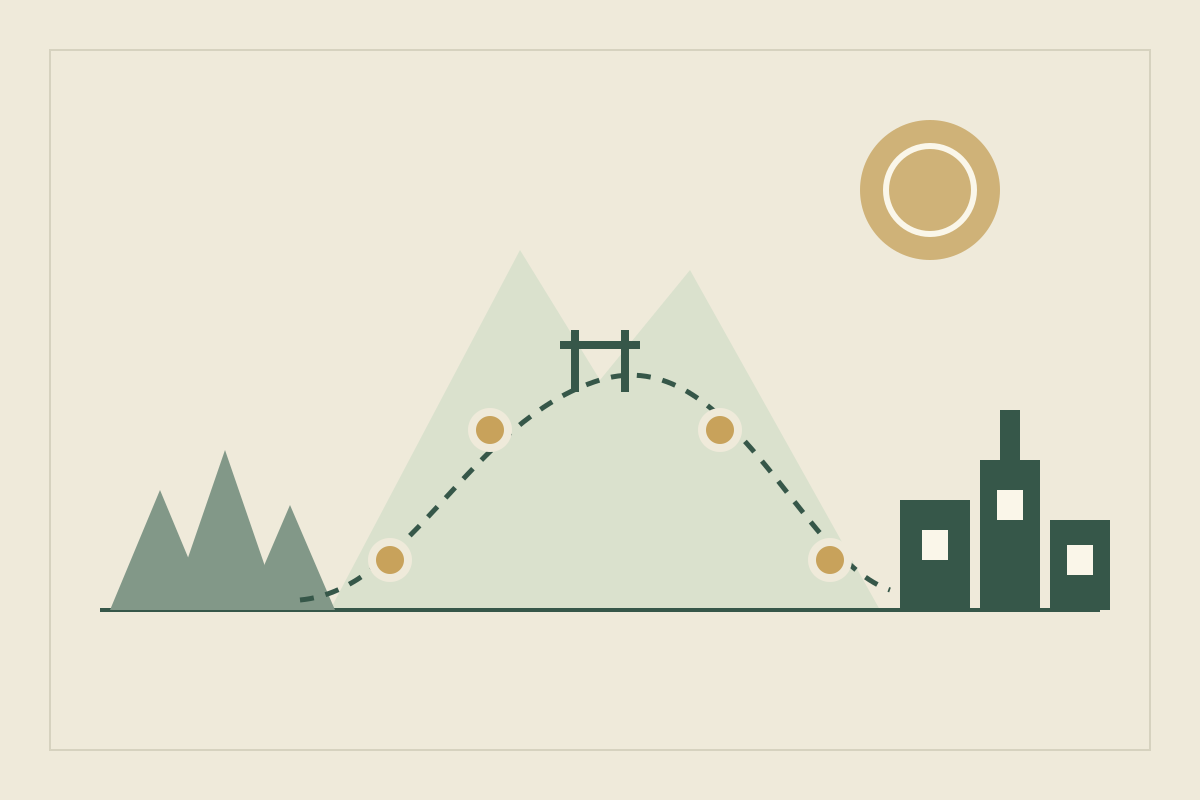
Ostra, the town in this guide, makes glass in a valley whose own hills were cleared generations ago. Its furnaces burn day and night, and households need fuel through the winter, so charcoal is the scarce thing. It is burned in the Calder, a forest on the far side of a mountain pass, and reaches Ostra only by mule.
Note the substitutes too. If people can burn peat instead, a shortage is milder and peat becomes a mark of poverty; if there is none, every price rise reaches every kitchen. The science-fiction settlement guide follows one scarce spare part through a single decision. This guide follows a whole town paying for its scarce thing, season after season. When that payment has to show in the streets, designing a fantasy city that feels lived in starts from the water, the food and one morning walk.
Decide who controls each step#
Between the source and the person who needs it, several people can say no or charge more. List them in order:
- The source. Who owns or guards the place it comes from?
- The skill. Who knows how to make, grow or extract it?
- The carriage. Who moves it, and at what risk?
- The store. Who holds it between seasons?
- The credit. Who lends to people who cannot pay today?
- The permission. Who can license, tax or forbid it?
The Calder belongs to a distant margravine, and her warden, Lise, sells cutting rights each spring. Charcoal burners work the forest for little. Muleteers such as Tam carry the sacks over Brenna Gap. The Pell house, a merchant family, buys at the top of the pass, stores the charcoal in its yard in town and sells it on. The town reeve, Ansel, collects a toll at the Gap.
Each wants something slightly different: Lise a steady price for the rights, Tam coin before he leaves town, the Pell house its loans repaid. When two of those wants collide, you have a scene.
Choose how people pay#
Money is whatever people accept because they expect others to accept it too. Most societies use several kinds at once, and who pays with what tells the reader about class.
| If people mostly pay with… | It suits stories about… | Decide |
|---|---|---|
| Coin | Strangers, travel, theft, a ruler’s authority | Who mints it, and what happens if it is debased |
| Credit and running accounts | Neighbors, obligation, a ledger that matters | Who keeps the record, and who can dispute it |
| Goods in kind | Isolation, shortage, a market that meets rarely | How anyone saves value for later |
| Labor or service owed | Hierarchy, dependence, escape | Who can demand it, and what refusing costs |
In Ostra, the glass traders who come upriver pay in the margravine’s silver. The Pell house supplies the workshops on credit against next season’s glass. Households buy by the basket on tally sticks, notched and split so that the yard and the customer each keep half. Apprentices are paid partly in flawed glass, which they trade at the market. Tam takes only coin, because a tally is worthless on the far side of the pass.
Set prices as ratios to wages, not as figures. “A basket of charcoal costs a furnace hand half a day’s pay in summer” tells the reader more than an invented number of coins, and it shows at once what a doubling would mean.
Follow the route and everyone who takes a share#
Every leg between source and buyer adds cost: carriage, losses, the risk of weather or robbery, and a margin for whoever bears that risk. Draw the route with a working map built around a journey, then note for each leg who handles the goods and what they add.
In Ostra’s chain, the Gap is the weak point. It closes in deep winter, and the town then lives on whatever the Pell yard stored before the snow.
Taxes, tolls and dues#
Decide who takes a share without touching the goods, and what, if anything, they give back: a guarded road, a town watch, or simply being left alone. For each tax, settle four things: what is taxed (a crossing, a sale, a household, land), whether it is paid in coin or in kind, who is exempt, and how people avoid it. Ansel charges a toll per mule at the Gap and a hearth tax each autumn. The large workshops pay a lower toll than small ones, a privilege they defend hard. And every muleteer knows a goat path that skips the gate, safe enough in summer.
Let debt tie people together#
Debt turns a single sale into a relationship that lasts. Decide who lends, against what security, what happens when someone cannot pay, and whether a custom softens the outcome, such as debts forgiven at a festival. Treat that custom like any other cultural practice: give it a cost and an exception.
Edda Vell runs a small workshop with two furnaces. She owes the Pell house for last winter’s charcoal, secured on her furnaces and repaid in glass. Corin, the house’s agent in Ostra, can extend her credit, call it in, or offer to cancel the debt for a share of her workshop. He does not need to be a villain for that offer to frighten her.
Ask who keeps the record. A ledger that only the creditor holds is a source of power. A ledger that burns is a plot.
Close the pass for one winter#
Now test the chain. A rockfall closes Brenna Gap six weeks before the usual snows. Nothing new is invented; every effect below follows from decisions already made.
| Person | What they hold | What the closure does | A likely move |
|---|---|---|---|
| Corin, the Pell agent | The only stored charcoal in town | Raises its value with every cold day | Raise prices and stop new credit |
| Edda, the glassmaker | Two furnaces and a debt | Leaves her unable to fire both and repay | Let one furnace go cold and sell her stock early |
| Ansel, the reeve | The toll and the hearth tax | Ends toll income while the watch still needs paying | Seize part of the Pell stock for the town, or raise the hearth tax |
| Tam, the muleteer | The goat path | Turns a shortcut into the town’s only supply | Carry charcoal over it at night and sell for coin |
| Lise, the warden | The cutting rights | Leaves the burners holding unsold charcoal | Look for a longer route through the margravine’s lands |
Follow a few rows into scenes. Corin’s prices fall hardest on households buying by tally, so families share hearths and burn furniture. Ansel must choose between enforcing his toll on Tam’s path and keeping the town warm; if he looks away, the large workshops complain that smugglers pay less than they do. Edda, short of fuel, accepts Corin’s offer.
By spring the town has changed without a single new invention. The Pell house owns part of two more workshops, and Tam’s path is a route the reeve wants to tax and the large workshops want closed. Choose which consequences the story spends, and leave the rest as background pressure.
Match the detail to the story’s size#
How much you settle depends on how long the story stays inside the economy:
- A short story needs the scarce thing, one controller and one person who cannot pay. Ostra could shrink to a single night in the Pell yard.
- A novel can carry the whole chain and one shortage that runs through it. Keep payment and taxes in your notes until a scene needs them.
- A series has room for the economy itself to change: a new route, a debased coin, a family that rises on a monopoly. Record the prices earlier books established and change them only with a cause.
Genre changes the goods, not the questions: on a space station the scarce thing might be water or cargo space. If you have an hour, fill in this sheet and stop:
Scarce thing:          Charcoal
Why it is scarce:      Made across Brenna Gap; the pass closes in winter
Who controls it:       Lise (rights), the Pell house (store, credit), Ansel (toll)
How people pay:        Silver, credit against glass, tally sticks
Who owes whom:         Edda owes the Pell house
What a shortage does:  Prices rise, debts are called in, smuggling begins
Common mistakes and how to fix them#
Money that never runs out. The heroes pay for everything and never earn. Give them an income or a debt, and let one plan fail for lack of funds.
Trade without a reason. Goods travel because one place lacks what another has, or makes it more cheaply. If both ends of a route produce the same thing, give one of them a reason to buy.
A shortage that hurts everyone equally. Somebody profits from every scarcity, even if only by selling the substitute. Without winners, a shortage has no politics.
Precise figures that invite checking. Exact yields or interest rates borrowed loosely from history tempt readers to do the arithmetic. Unless the plot turns on the numbers, keep them relative and consistent.
Track who depends on what in Yazar.io#
Yazar.io gives an economy like Ostra’s a natural shape: charcoal and glass as entries in Items, the Pell house and the reeve’s office in Organizations, Brenna Gap in Locations, and Edda, Corin and Tam in Characters. Type “charcoal” in their entries and it links itself. The charcoal entry’s backlink panel then lists everyone who depends on it, which is exactly the list you need when the pass closes (features).
Field templates let the Items section ask the same questions of every good, for example a relationship field for who controls it and a text field for its price in wages (updates). Keep unresolved questions, such as whether Ansel also owes the Pell house, as notes marked Idea or To Review, and switch them to Used once a scene commits to an answer.
Sources
- Yazar.io: Features · October 10, 2026
- Yazar.io: Product updates · October 10, 2026