The short answer
Start with where a fantasy creature can live and what it must eat, then give it one adaptation that makes that life costly. Place it in a short food chain that includes the people who use it, fear it or keep it. A monster still needs prey, or a limit and a cost if it breaks the chain. Show the constraint in a scene before you add more creatures. A sapient people, with its own dissent, belongs in a different guide.
Writers who search for how to create a fantasy creature, or for monster ideas, often want a striking animal. A list of powers does not make one. “Huge, ancient, breathes fire, hates villages” is a costume. The village still has to eat, and the creature still has to live somewhere when it is not attacking.
This guide is about animals, beasts and monsters: where they can live, what they eat, and what people do with them. A sapient people, with dissent and a history of its own, is a different job. Creating a fantasy race that feels like a people starts from a body that belongs to persons. Start here when the creature is not a person.
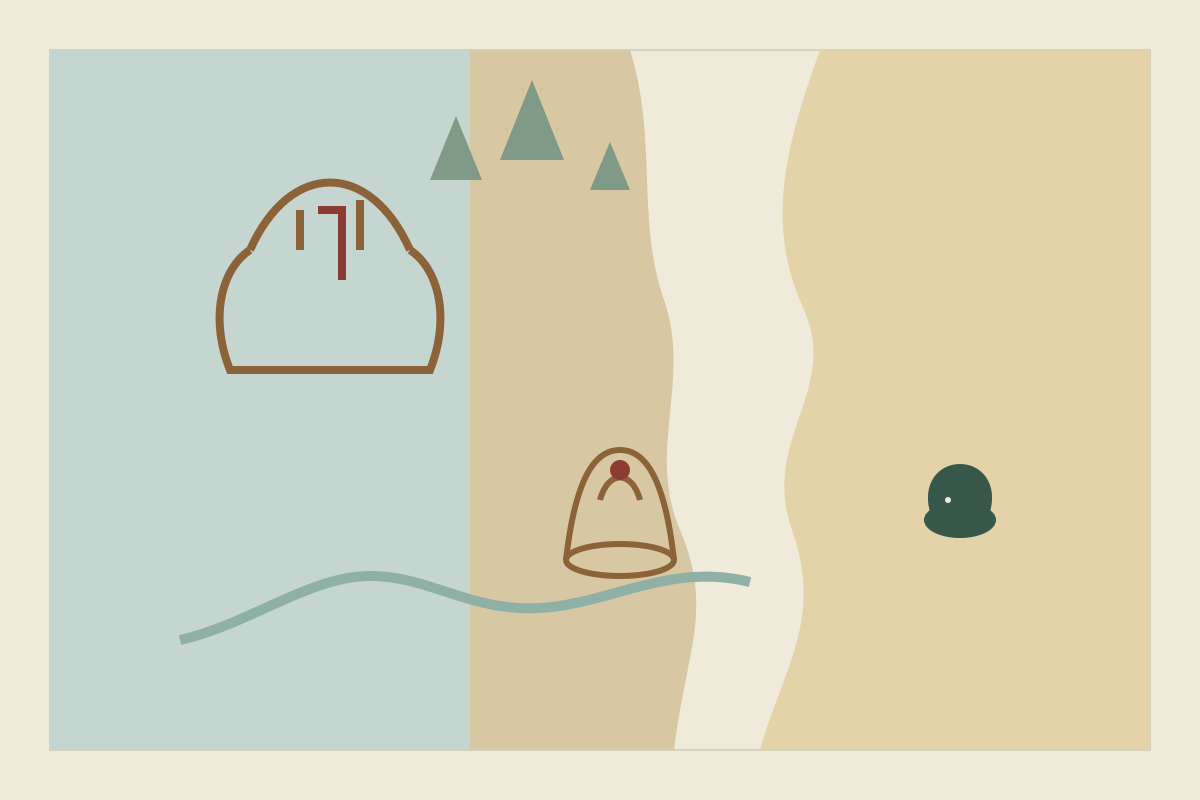
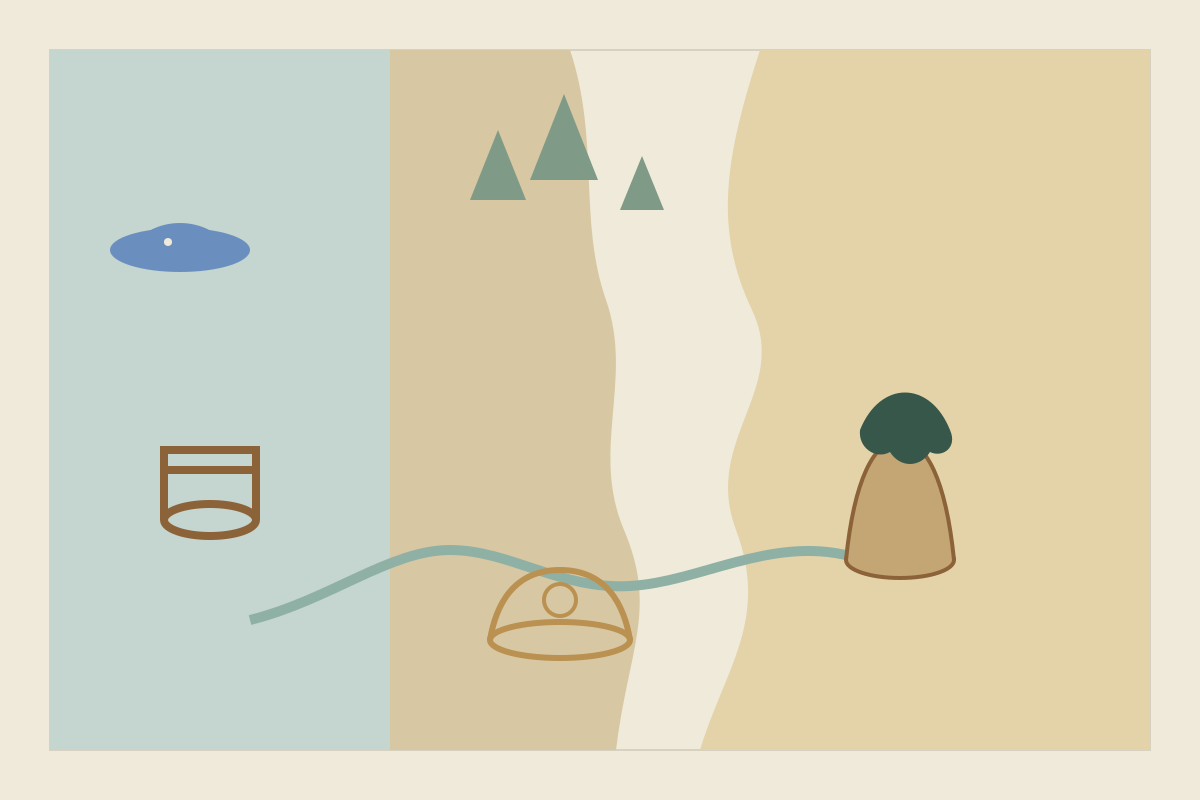
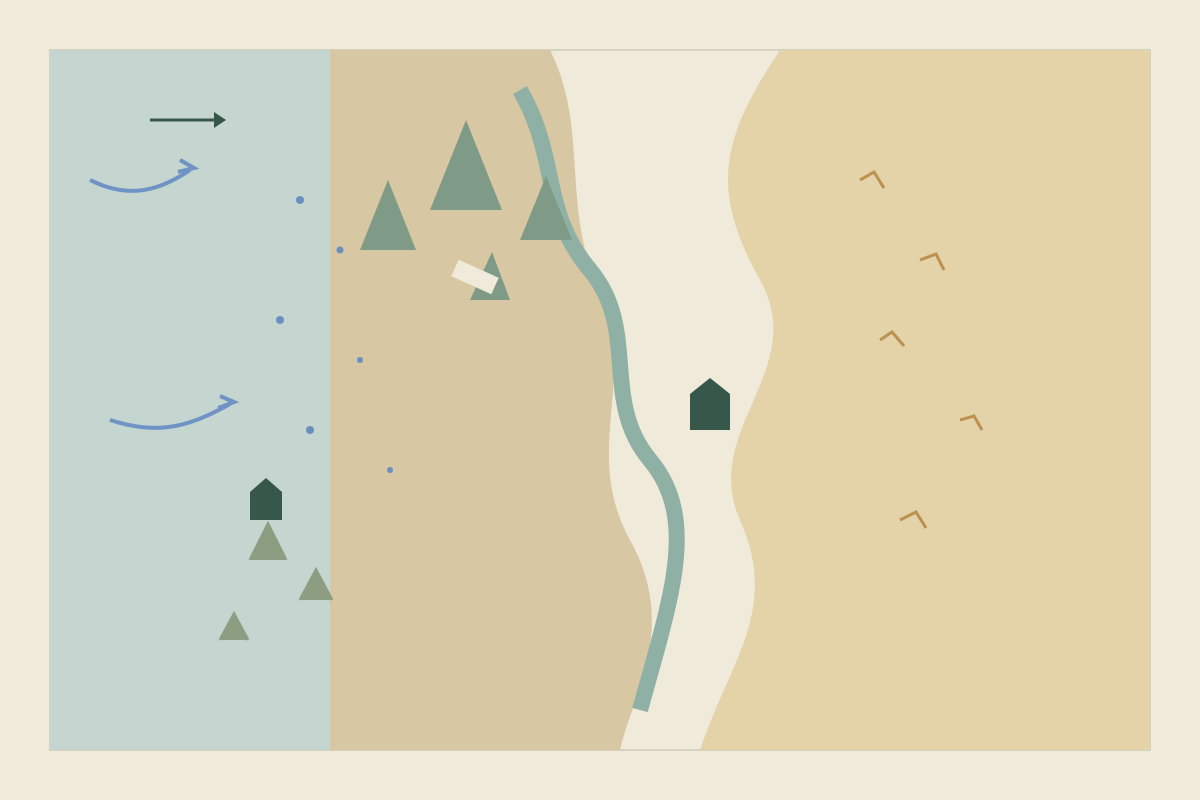
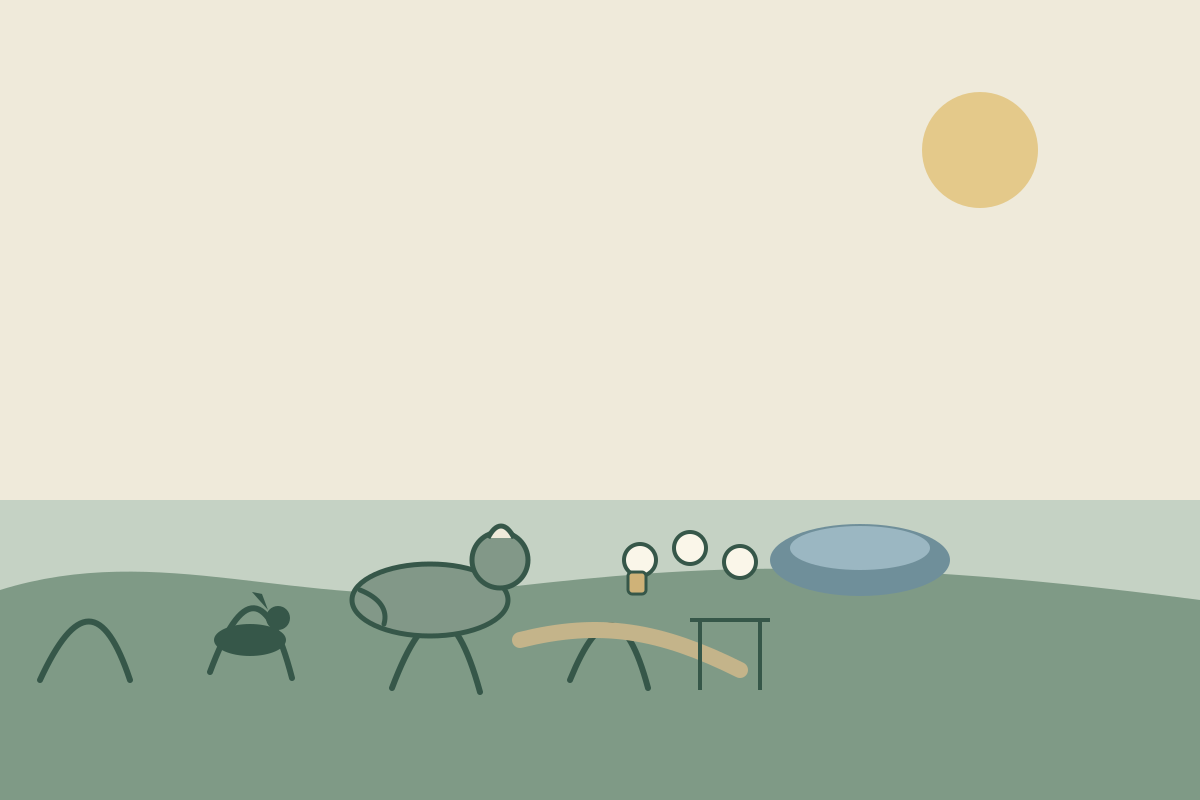
The example is the marrek, an invented grazer of Harrow Fen, a tidal reed marsh. It feeds on the salt reed and has to drink at the spring pools on higher ground. The lirn, a predator, takes calves on the path between the two. Ren herds, Senna cuts reed for roofs, and Osk hunts. The fen, the animals and the names are made up for this exercise.
Start from the place it can live#
Skip the catalog of claws. Name the ground that can support the creature, and one thing that ground does not provide.
Harrow Fen gives the marrek food and withholds fresh water. Salt reed grows where the tide reaches. The spring pools, the ponds on the dry rise, are the only drink. A marrek that stays in the reeds thirsts. A marrek that stays by the pools starves. The walk between them is the life.
Ask four questions, then stop:
- Where does it feed, and is that food there only in season?
- Where does it drink, sleep or breed, if that place is different?
- What happens if it cannot move between those places?
- What about this animal varies from one beast to the next?
Most marreks need the pools every few days. A few last longer. That spread is as ordinary as size. Ren’s hope of penning a pair near the village depends on whether her two are the exception. The herd cannot be planned as if every animal were the average.
If the story travels with the herd, sketch the path the way you would sketch a hard journey. Mapping a fictional region starts from a route and an obstacle. Here the obstacle is a flooded path, or a fence, between food and water.
Give it one adaptation the place demands#
An adaptation is a way of living with that shortage, not a power. The marrek can digest salt reed. Salt water does not answer its thirst. Everything else sits in an ordinary range: weight, speed, temper, how long a calf can wait.
| Fact | In Harrow Fen | If you move the herd inland |
|---|---|---|
| Eats salt reed | Food is the tide line, and people want the same reed for roofs | The reed stops, and the animal has nothing else it can keep down |
| Must drink fresh water | The spring pools are a few days’ walk | Every inland day needs water carried to it |
| Animals last different spans between drinks | A private fact, until someone pens “a marrek” and assumes the average | The difference between an animal that survives the pen and one that does not |
Three facts are enough. A second head, a venomous bite and night vision would not change the scene you are about to write. Add a trait only when a scene will fail without it.
Put three links in the food chain#
A creature that eats nothing, and that nothing eats, has no way to push back when the story removes it. Write three links you can follow when one of them fails. The marrek sits in the middle on purpose.
- The salt reed feeds the marrek, and it also thatches roofs. A large herd and a hard winter cannot both be cheap.
- The marrek feeds people, and it feeds the lirn, which takes calves on the drinking path.
- The lirn keeps the herd from lingering on the seed reed. Kill every lirn and the thatch fails two years later, which nobody in the hunting party is there to see.
People are in the chain. They are not outside it, handing the animal a role.
| If this fails | Who feels it first | Who feels it later |
|---|---|---|
| The tide is poor and the reed is thin | The herd, then Senna’s roofs | Ren, who has fewer calves to keep |
| The path between reed and pools is blocked | Calves, then any marrek that cannot wait | Osk, because the lirn leaves the path and comes to the pens |
| The lirn is hunted out | Osk, who gets the result he wanted | Senna, when the herd camps on the seed reed |
Who may cut reed, who may kill a marrek and who is paid to thin the lirn are prices and permissions. Designing a fictional economy follows one scarce thing through the people who can say no. Here the scarce things are fresh water, seed reed and a calf.
Decide how people use it, fear it and keep it#
Use, fear and keeping are three relationships, not three adjectives. Write one practice, one cost and one person who wants an exception.
The practice: a household may pen two marreks through the dry weeks if it carries their water from the pools. The cost: every waterskin poured at the pen is a drink the wild herd does not get, and the penned animals still need reed, which is Senna’s thatch. A waterskin here is a bag of water, carried from the pools to the fence. The exception: a herder whose animals last longer between drinks can skip a day of carrying. The exception can be guessed wrong.
Three people, three wants:
| Person | What they want from the animal | What they will not say aloud |
|---|---|---|
| Ren, a herder | To keep two marreks by the village and sell the calves | She is not sure these two can last a day longer than the others |
| Senna, a thatcher | A smaller herd, so the seed reed survives the winter | Her own roof is already promised to a cousin |
| Osk, a hunter | The lirn dead, because it took a calf on the path | He wants the path safer for his own walk, and he wants the pay |
None of them is wrong about the part they see. Ren can care for the animals and still take water the herd needs.
Fear belongs in the same picture. The village calls the lirn a monster. The word means that it takes calves and that people do not forgive it. It does not mean the lirn can ignore hunger. If your monster is feared, write the loss people name, and the meal the creature still has to find.
Keeping an animal is a bargain with the habitat, not a friendship. Penned marreks still drink, and they still eat reed. Someone has to carry the water. If the keepers are not human, what their bodies need each day belongs with the people, not with the livestock. Creating a fantasy race is that page. The marrek does not gain a culture because people argue about it.
Show the creature in a scene#
The path floods. The herd is in the reeds, a day past the usual drink. Ren wants to drive her two marreks to the village and water them from skins. Senna says those two will be fed seed reed she has already counted. Osk says the lirn follows calves, so the pens will draw it off the path and into the lanes.
Before you add a second monster, check the draft:
- Could a reader see the thirst without a speech about kidneys?
- Do at least two people want different outcomes from the same animal?
- Is the trouble about water, reed and a calf, rather than about an evil nature?
- Does someone gain from the custom in a way they would not say aloud?
If the answers are no, the scene needs a sharper constraint, not a longer bestiary entry.
Revealing lore without info-dumps is the wider method: give the fact a job in the scene, and let an argument carry what a lecture would. Ren does not explain the ecology of Harrow Fen. She argues about two animals and a skin of water. The reader can build the chain from that.
When the creature breaks the chain#
Some stories need a creature that does not fit. A lirn that never eats, a marrek that crosses a desert, a beast that appears where nothing it could prey on lives. Treat that break the way you would treat a spell.
| What you are making | The test that still applies | What you add |
|---|---|---|
| An animal the story uses | Habitat, food, one adaptation | Who keeps it, and what the keeping costs |
| A beast people fear | The same chain | The loss they name, and the meal it still needs |
| A monster that breaks the chain | Name the break out loud | A limit and a cost, as with a spell |
Name the limit, the cost and who pays. Perhaps the lirn can leave the path only on the night the pools freeze, and each such night a stretch of reed dies back. Perhaps a charm lets a marrek drink brine, and the charm drains the spring pool the pen was drawing from. Building a magic system keeps limits, costs and consequences apart. A monster that is powerful only because the plot is stuck will not survive the next chapter, when the plot needs it to be weak.
Do not dress a living people’s sacred animal as your monster. If a reader can name a living faith, or a living herding people, from the rites, the taboo or the supposed character of the beast, the page has copied a marker. Borrow the question: who carries the water, who may kill, who goes hungry when the herd is penned. Leave the costume.
Match the depth to the page time#
Build in proportion to how long the creature stays on the page.
| Story length | Develop fully | Leave sketched |
|---|---|---|
| Short story | One habitat constraint, one predator or use, two people who disagree | Other regions, a life cycle, a second monster |
| Novel | The chain, the penning rule, three viewpoints, the flooded path | Creatures met once at a border |
| Series | What changed between books: the herd’s path, who may hunt, which fact the reader already saw | Any beast no scene has needed yet |
A creature that crosses one chapter needs a constraint the scene can use. It does not need a genus.
Across a series, write down the constraint you have already put on the page, so a later book does not walk the herd into mountains with nothing to drink. Keeping a series bible is that record of commitments, rather than a pile of unused ideas.
Common mistakes#
The hat. If you can finish “the marrek is…” with one adjective, you have a hat. Replace the adjective with a pressure and two people who answer it differently.
The meal that never arrives. A predator with no prey, or a herd with no forage, can appear once as a wonder. By the second scene the world owes them a food source, or a cost for going without one.
The lecture. Osk explains the food chain to a stranger. He might say that the lirn follows calves, because the stranger is about to pen some. He would not explain the reed. Let the argument about the seed reed carry it.
A people dressed as a beast. The marrek does not have a religion, a class or a single opinion. People do. If the creature talks, bargains and disagrees among its own kind, move it to the guide on peoples.
Keep the creature beside the fen#
A notebook page is enough for one animal: the reed, the pools, the path, Ren, Senna, Osk, and the waterskin rule. When several creatures have to stay tied to the places, people and goods that mention them, a linked record saves the search.
Yazar.io is one tool that fits that job. It keeps a Creatures section beside Locations, Characters, Items and Races (features). Put the marrek’s habitat and the penning rule on one creature record. Field templates let you add the questions you actually use, such as what it eats and who may hunt it, and changing a template later leaves existing records as they were (field templates). Type Harrow Fen, or @, and the name links itself. The backlink panel then lists every page that mentions the marrek (features).
Relationships can connect that record to a location, a character, an item and a race, and the other record shows the link as well (updates). The free plan includes 15 editable records for each entity type in a book, Creatures among them, so the marrek, the lirn and the other animals a scene actually meets fit on it. Glossary, Timeline, Notes and Quotes are unlimited, so a creature you have not used yet can wait as a note. Yazar Pro lists those entity records as unlimited for normal individual authoring (plans). Descriptions, notes and custom field values on the records are stored encrypted with AES-256-GCM. That is storage encryption, not end-to-end: the server decrypts them when you sign in (privacy). Yazar.io does not invent the animal or write the scene (features).
Sources
- Yazar.io: Features · October 25, 2026
- Yazar.io: Product updates · October 25, 2026
- Yazar.io: Plans and limits · October 25, 2026
- Yazar.io: Privacy policy · October 25, 2026