The short answer
Choose Yazar.io if you are a novelist who wants a connected reference for your book’s characters, places, family ties and events beside a manuscript in Word or Google Docs, with a read-only wiki on the free plan. Choose World Anvil if other people will explore the world: it builds a full wiki from articles and interactive maps, with co-author ranks and secrets for staged reveals, though its archived pricing page puts private articles, co-authors, secrets and Manuscripts on paid Guild tiers. Yazar.io keeps places as linked records and one account on the books, and World Anvil does not draw maps either; it makes your own map image interactive. Yazar.io stores entity descriptions, notes and custom field values encrypted with AES-256-GCM. This comparison is based on public documentation, including archived World Anvil pages, not hands-on testing, so check current terms.
Yazar.io and World Anvil both keep a fictional world in linked entries, but they expect different readers. Yazar.io assumes the main reader of your notes is you, mid-draft, checking who owns the toll bridge before you write the scene. World Anvil assumes other people will walk through the world too: players opening a map, readers browsing articles, co-authors adding lore.
This is a documentation-based comparison, not hands-on testing. World Anvil’s claims come from archived copies of its official pages, each dated in the sources, so check its current terms before you commit.
What each tool is built around#
Yazar.io is a web workspace for the world behind a novel. It does not replace your writing app; the manuscript stays in Word or Google Docs (features). Every book comes with sections for Characters, Locations, Organizations, Lore, Races, Creatures, Items, Spells, Beliefs and a Glossary, plus a Family Tree, a Timeline and Notes. Type a name and it links itself, or type @ to pick one; every page has a backlink panel showing who mentions it. It does not generate text, and it has iPhone, iPad and Android apps.
World Anvil builds a world from articles. Its worldbuilder workflow, as archived in June 2024, calls articles “the core of most World Anvil worlds” and adds interactive maps, timelines, chronicles, family trees and whiteboards around them (workflow, archived). Its wiki page, archived in July 2026, presents the result as a wiki for a game, novel or comic that you can build privately or with co-authors, then share in parts with players or readers (wiki, archived).
Run one small world through both#
Before trusting either tool with a real book, enter the same sample in both: the river city of Haldmere. Ines Orsay is heir to the family that collects the bridge tolls. Tomas Brack pilots the ferry that undercuts them. The Orsay family spans three generations. One event changes everything: the night the Tollbridge fell, which ruins the Orsays and makes Tomas indispensable.
In Yazar.io, Ines and Tomas go into Characters, Haldmere into Locations and the Orsays into Organizations. Give Ines her parents as relationships and they appear on the Family Tree automatically (updates); the dynasty family-tree guide covers what to record for each generation. The bridge’s fall becomes a Timeline event with Ines and Tomas as participants and Haldmere as its location, so it is listed on all three pages in timeline order. Mention Tomas in Haldmere’s description and the name links itself. Your suspicion that Tomas cut the cables goes into Notes as an idea, where no wiki visitor will see it.
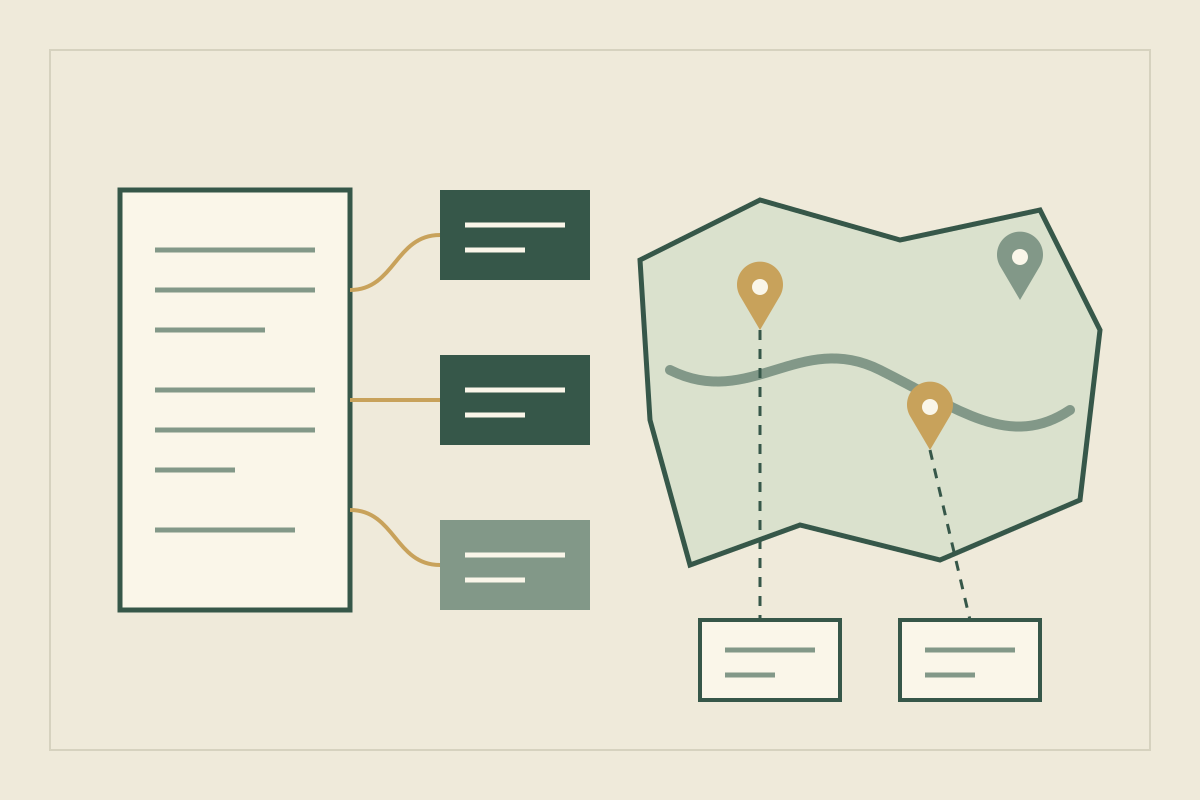
In World Anvil, each record becomes an article built from a template. A map of Haldmere, drawn elsewhere, becomes an interactive map: a pin on the bridge links to the Tollbridge article, another on the ferry landing links to Tomas (maps, archived). The fall goes on a timeline, where the archived guide asks for a title and a start year for each event (timelines, archived). The cable theory becomes a secret, hidden from readers until you reveal it (secrets, archived).
Then run the test that matters: decide the bridge fell a year earlier, count the places you have to edit, and note whether the tool showed you them or you relied on memory.
Compare by task#
| Task | Yazar.io | World Anvil | Stronger fit |
|---|---|---|---|
| Keeping the world beside a manuscript | Built for it; the novel stays in Word or Google Docs | Manuscripts lets you draft inside World Anvil, on paid tiers | Yazar.io, unless you want drafting and lore in one app |
| A public wiki for readers or players | Free read-only wiki; private, unlisted or public; you can add a password; notes never included | A full world wiki with categories, themes, search and per-pin visibility | World Anvil |
| Maps | Places as linked records, with no map editor | Interactive maps from your own image, with pins, layers and linked maps | World Anvil |
| Linking | Names link as you type or with @; backlink panel on every page | Mentions while writing and a one-click Autolinker | Both; Yazar.io documents backlinks on every page |
| Collaboration | One account keeps the records; readers use the wiki | Four co-author ranks; the owner needs a Guild tier | World Anvil |
| Privacy of notes | Notes are never included; the Timeline is off unless you publish it | Secrets and a private Notebook, both Guild features | Yazar.io on a free plan; World Anvil for staged reveals |
| Exporting | Whole book as Markdown or JSON; no import | A page to save or print; JSON archive on Guild tiers | Yazar.io on a free plan |
Keeping the world beside a manuscript#
Yazar.io’s FAQ is plain about it: you don’t write the novel there; you keep the world behind it consistent (features). That suits writers settled in Word or Google Docs. World Anvil offers the opposite: Manuscripts, writing software that integrates with your world bible, listed in its archived guide for the Master tier and above (Manuscripts, archived). If you want drafting and lore in one window, that counts for World Anvil.
A public wiki for readers or players#
This is World Anvil’s home ground: categories, tags, themes, a search across the whole world, and visibility you can set for individual map pins and layers (wiki, archived; maps, archived). Yazar.io’s wiki is smaller and quicker to switch on: each book can become a read-only wiki, free on both plans, with sections toggled on or off (wiki), set to Private, Unlisted or Public, and you can add a password (FAQ). Notes are never included. The Timeline can be published and is off by default (updates). That is enough for a novel’s companion, and far less than a world built for exploring.
Maps#
Neither tool draws maps. World Anvil says plainly that it is not mapmaking software: you upload an image made elsewhere, add pins, lines and layers, link pins to articles or to other maps, and keep secret pins private (maps, archived; workflow, archived). For a game master whose players explore by place, that model is hard to beat. Yazar.io keeps geography in Locations, linked to characters and events, and does not include a map editor. Whichever you pick, draw the map first; this regional mapping guide starts from a difficult journey.
Linking#
Both link entries with little effort. In Yazar.io, a typed name links itself, @ opens a picker, and the reverse side of a relationship such as parent or birthplace appears automatically (updates); the backlink panel answers “where is Tomas mentioned?” on his own page. World Anvil has a mentions system for linking as you write, and an Autolinker that links existing words to their articles in one click, fully automatically or suggestion by suggestion (Autolinker, archived). We did not verify how World Anvil lists incoming links on an article, so check that with the sample.
Collaboration#
World Anvil wins for groups. Its co-author guide, archived in May 2026, describes four ranks, from Writer, who can only submit drafts, to Co-Owner. Co-authors can use free accounts as long as the world’s owner is a Guild member, and the same guide says Manuscripts does not support co-writing (co-authors, archived). Yazar.io keeps one account on the records, and others read the wiki.
Privacy of notes#
Yazar.io keeps working notes apart by design: Notes are never included in the wiki, and the Timeline is off unless you publish it (wiki, updates). Yazar.io stores entity descriptions, notes and custom field values encrypted with AES-256-GCM (privacy). World Anvil treats privacy as staged revelation, which suits a mystery or a campaign: secrets hide snippets inside articles until you reveal them, and the Notebook is visible only to you (secrets, archived; notebook, archived). World Anvil’s pricing page, as archived in August 2026, lists private worlds and articles, secrets and the Notebook as Guild features (pricing, archived). On a free account, check what a logged-out visitor can see before you write spoilers.
Exporting#
Yazar.io exports a whole book as Markdown, a .zip it describes as compatible with Obsidian and Notion, or as JSON (updates), and export is included on the free plan (pricing). Images stay behind, and there is no import, so an export is for reading, backup or another tool (offline FAQ). World Anvil’s export guide, archived in August 2025, describes a basic export that opens your world as a page to save or print, and a zip archive of JSON for Guild members (export, archived).
Common mistakes when choosing#
- Counting features instead of tasks. World Anvil lists far more tools; a novelist who needs five of them still has to learn where the rest live.
- Expecting a map editor. World Anvil makes your image interactive. Yazar.io keeps places as linked records and does not include a map editor.
- Putting spoilers in shareable entries. In Yazar.io, keep them in Notes if the wiki is on. In World Anvil, use secrets, then view the world as a visitor would. The guide to revealing lore gradually helps you decide what readers learn and when.
- Ignoring free-plan limits. Yazar.io’s free plan allows 15 editable records per section; World Anvil’s free tier, on the archived pricing page, has no private articles or co-authors.
- Migrating before testing. Yazar.io has no import, so moving a large world in means retyping it. Try Haldmere first.
Who should pick which#
| You are | Start with | Why | Check first |
|---|---|---|---|
| A novelist working alone | Yazar.io | Ready-made sections, automatic links and a timeline beside Word or Google Docs | The free plan’s 15 editable records per section |
| A series writer | Yazar.io, with the whole series in one book | Each character’s events listed in order, and quick search covers the book | No import for an existing series bible |
| A game master | World Anvil | Players explore by map pin and article, and secrets keep preparation hidden | Which map and privacy features need a Guild tier |
| A shared-world group | World Anvil | Co-author ranks let several people write while one person keeps canon | The world owner needs a Guild membership |
For a series, the series-bible guide shows how to record what each book has committed to. The exception is a series writer who wants readers to explore a map: World Anvil’s interactive maps have no counterpart in Yazar.io.
How to move between them#
Neither tool’s documentation that we checked describes importing from the other, so plan a move as a rebuild.
From Yazar.io to World Anvil. Export the book as Markdown and recreate each entry as an article, pasting text from the export. Upload images separately. Once the articles exist, the Autolinker can reconnect names to them.
From World Anvil to Yazar.io. There is no import, so you retype or paste from World Anvil’s export, starting with the entries your next chapters need. A map can come over only as an image attached to a location entry, because Yazar.io does not include a map viewer; its pins and layers stay behind (updates).
Either way, open the export before you rely on it, and keep the old world read-only until the move is finished, so there is only one canon. If local files matter more than either model, compare Obsidian and World Anvil, or see the wider shortlist of worldbuilding tools.
Update, 21 October 2026: Stated encryption as AES-256-GCM for entity descriptions, notes and custom field values, and corrected the wiki (you can add a password; notes stay out; the Timeline can be published and is off by default). World Anvil’s maps, co-authors and staged secrets stay stated as its strengths.
Sources
- Yazar.io: Features and FAQ · October 21, 2026
- Yazar.io: Privacy policy · October 21, 2026
- Yazar.io: Plans and limits · October 11, 2026
- Yazar.io: Shareable wiki · October 11, 2026
- Yazar.io: Product updates · October 11, 2026
- Yazar.io: Who can see my Shareable Wiki? · October 11, 2026
- Yazar.io: Can I use yazar.io without an internet connection? · October 11, 2026
- World Anvil: Worldbuilder workflow (archived 23 June 2024) · October 11, 2026
- World Anvil: Create a wiki for your worldbuilding (archived 9 July 2026) · October 11, 2026
- World Anvil: Interactive maps (archived 2 July 2026) · October 11, 2026
- World Anvil: Feature guide to timelines (archived 9 July 2026) · October 11, 2026
- World Anvil: Automatic article linking (archived 28 October 2025) · October 11, 2026
- World Anvil: Feature guide to co-authors (archived 29 May 2026) · October 11, 2026
- World Anvil: Feature guide to secrets (archived 12 June 2025) · October 11, 2026
- World Anvil: Feature guide to the notebook (archived 18 December 2025) · October 11, 2026
- World Anvil: Feature guide to Manuscripts (archived 26 May 2025) · October 11, 2026
- World Anvil: How to export your world (archived 1 August 2025) · October 11, 2026
- World Anvil: Pricing (archived 1 August 2026) · October 11, 2026
- Yazar.io: Shareable wiki software · October 11, 2026